Here's the Straight Answer
If you've been scanning the wine aisle wondering whether your favorite bottle of Barefoot fits your vegan lifestyle, you're definitely not alone. Wine seems like it should be simple — grapes, fermentation, done. But the truth is a little more complicated, and Barefoot red wine is one of the most-asked-about brands when it comes to this exact question.
Let's clear it up, in plain language.
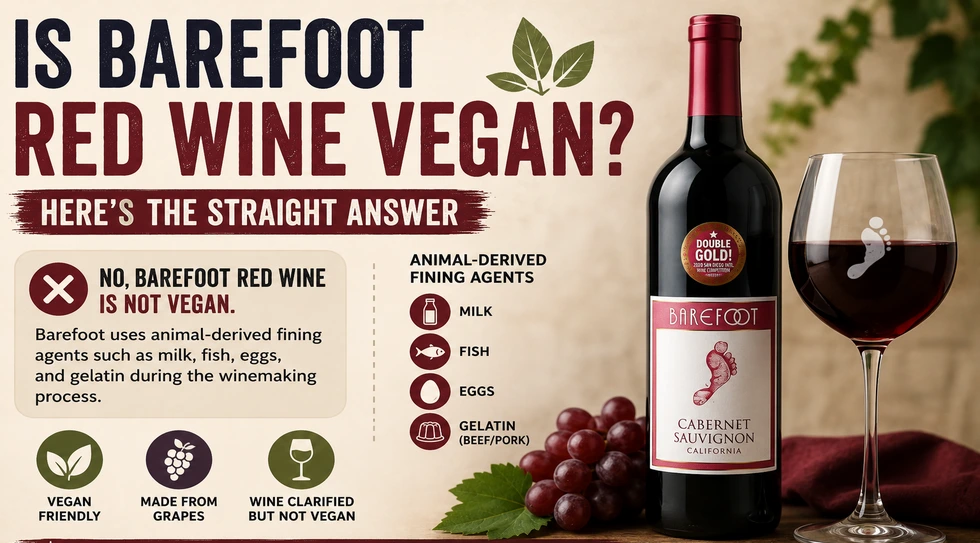
No, Barefoot red wine is not vegan. This applies to all of their red wines, including Cabernet Sauvignon, Merlot, Pinot Noir, Malbec, Rich Red Blend, and Sweet Red Blend.
Here's why: during the winemaking process, wine needs to be "fined," which is just a fancy word for clarified or filtered. Barefoot uses fining agents that can include milk, fish products, eggs, and gelatin (sourced from beef and/or pork). Barefoot itself has confirmed this directly, stating that during the winemaking process the wine is filtered with fining agents that are recognized as traditional methods for clarifying wine, and that many of these agents are derived from animals, including milk, fish, eggs, and gelatin.
This isn't just a one-time statement either — Barefoot has repeated this same explanation in company communications going back over a decade, consistently confirming the same animal-derived fining process.
According to PETA's research on winemaking, common animal-derived fining agents include blood and bone marrow, milk casein, crustacean-derived chitin, egg whites, fish oil, gelatin, and isinglass, which is gelatin sourced from fish bladder membranes. This matches exactly what Barefoot has disclosed about its own production process.
Generally, yes. Most bagged, crunchy pretzels you'll find at the grocery store are vegan by default. Think classic twist pretzels or pretzel sticks with just salt — these are usually made from plant-based ingredients only.
That said, always flip the bag and check the ingredient label. Watch out for:
If the label just shows flour, water, yeast, oil, salt, and maybe malt — you're good to go.
This is the part that confuses a lot of people, so let's break it down simply.
Yes, fining agents are technically used to pull impurities out of the wine, not to stay in the final product. Barefoot has stated that generally, none of these animal-derived products remain in the wine because they're removed by filtration before bottling.
So why isn't it vegan, then? Two reasons:
This is exactly why brands like Barnivore — a well-known database that tracks vegan alcohol — list every single Barefoot wine, including all reds, as "Not Vegan."
This is where things get a little more nuanced. Some sources consider Barefoot wine "vegetarian-friendly" since the fining agents are filtered out and don't typically remain in the final bottle — meaning you're not technically consuming animal flesh or by-products in the glass.
However, this isn't a guarantee. Since the fish-derived gelatin and other animal agents are used directly in production, strict vegetarians who want to avoid any animal involvement in their food and drink may still choose to steer clear. If you're more flexible and mainly care about what ends up in your glass rather than how it was made, Barefoot wine is more likely to fit your standards than it would for a vegan.
Bottom line: Barefoot wine sits in a gray zone for vegetarians — technically animal-free in the final product, but not animal-free in the process.
Good news here — Barefoot Moscato is considered gluten-free, including Barefoot Pink Moscato and the Moscato Spritzer line. Since wine is made from grapes, not gluten-containing grains like wheat, barley, or rye, the base ingredient itself is naturally free of gluten.
That said, a few things worth knowing:
Barefoot does not officially market its wines with celiac-safe certification.
Cross-contamination during production is generally considered low-risk, but not guaranteed.
If you have celiac disease or a severe gluten intolerance, it's always smart to double-check with the manufacturer directly rather than relying on general assumptions.
Yes, the same logic applies across the Barefoot range — most Barefoot wines, including their reds, whites, and sparkling wines, are considered gluten-free since they're grape-based. As with the Moscato line, this isn't an official certified claim, just a reflection of the ingredients used.
If Barefoot isn't going to work for your lifestyle, the good news is the vegan wine market has grown a lot. Look for wines that are:
Labeled "vegan" or "unfined/unfiltered" on the bottle
Verified on databases like Barnivore, which track direct company responses
Made using plant-based fining agents like bentonite clay, pea protein, or activated charcoal instead of gelatin or fish products
Many smaller and mid-size wineries have shifted to these plant-based alternatives, so you have more vegan-friendly options today than ever before.
Barnivore Vegan Alcohol Directory — direct company correspondence with Barefoot Wine: barnivore.com/wine/166/Barefoot-Wine
PETA — "Is Wine Vegan?": peta.org/about-peta/faq/is-wine-vegan
PETA — Animal-Derived Ingredients Resource: peta.org/lifestyle/food/animal-ingredients-list
The Growler Magazine — "Ingredients Unknown: The Murky World of Animal Additives in Alcohol": growlermag.com
Barefoot Wine official site: barefootwine.com
Plant-Based Living Writer
Hi, I'm Elena! I write about vegan food, ethical products, and everyday plant-based living. My goal is to make going vegan (or just eating more plants) simple, practical, and a little less confusing — one ingredient label at a time. 🌱
