Lion’s Mane mushroom has become one of the most searched mushrooms in recent years. While once known primarily within culinary traditions, it is now widely discussed across nutrition, wellness, and natural food communities.
Lion’s Mane mushroom, scientifically called Hericium erinaceus, is an edible fungus recognized for its white, shaggy appearance. It naturally grows on hardwood trees and has been consumed as food for generations.
Unlike many mushrooms that are valued mainly for flavor, Lion’s Mane is often described as a functional mushroom. This term is used for foods that contain naturally occurring compounds studied for their interaction with normal body functions.
Lion’s Mane is classified as food, not medicine.
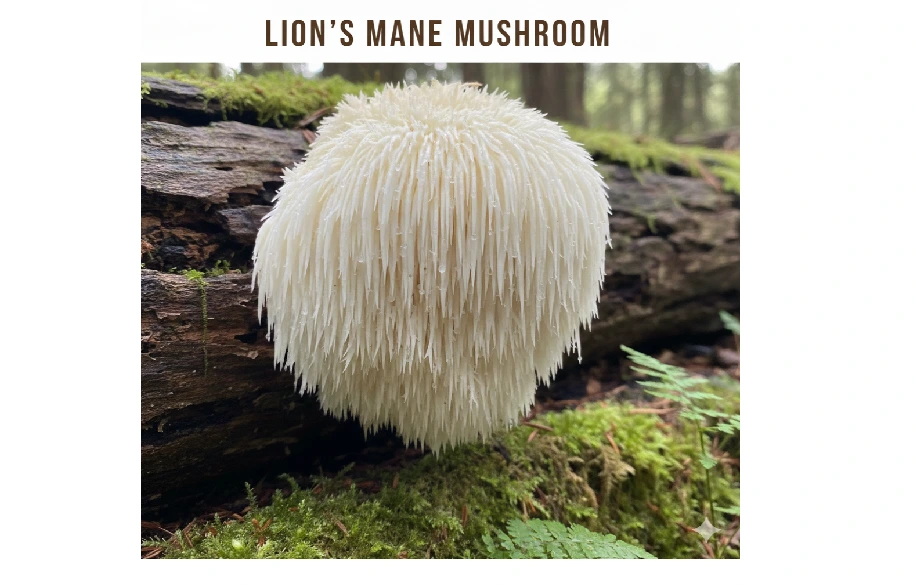
The rising interest in Lion’s Mane reflects a broader shift toward food-based wellness. Many people are moving away from quick solutions and toward ingredients that feel natural, familiar, and sustainable.
Lion’s Mane stands out because:
Lion’s Mane contains bioactive compounds, particularly hericenones and erinacines, which are being studied for their interaction with nerve growth processes.
Lion’s Mane belongs to the functional mushroom category, but it differs from varieties like reishi, chaga, or cordyceps.
Its distinction lies in specific bioactive compounds called:
Lion’s Mane is a fungus and is naturally vegan. It contains no animal-derived components.
However, processed products such as capsules should be reviewed carefully. Some supplements may use gelatin-based capsules, while others are clearly labeled as vegan-friendly.
There is no medically fixed “best time,” but common patterns include:
Reported side effects are rare but may include:
Because Lion’s Mane does not contain caffeine, timing is generally based on routine preference.
A lion’s mane grow kit allows you to grow fresh mushrooms at home without advanced gardening knowledge. These kits usually contain a pre-inoculated growing block made from sawdust or hardwood substrate that already includes lion’s mane mushroom culture.
To grow, you simply:
Grow kits are popular because they:
They are ideal for beginners who want to experience growing lion’s mane before investing in more advanced cultivation methods.
Lion’s mane supplements can be taken in the morning or early afternoon. Many people prefer morning use as part of their daily routine.
There is no universal “perfect” time. The ideal timing depends on personal preference and routine consistency. Some individuals take it:
Consistency matters more than timing. Taking it at the same time daily supports routine adherence.
Always follow dosage instructions provided on the supplement label.
Dried lion’s mane mushroom is the whole fruiting body that has been dehydrated to extend shelf life. Drying preserves the mushroom while making storage easier.
Dried lion’s mane has a mild, slightly sweet, seafood-like flavor. Many people prefer dried forms because they contain no additives and allow full control over preparation.
Store in a cool, dry place away from moisture.
Dried lion’s mane has a mild, slightly sweet, seafood-like flavor. Many people prefer dried forms because they contain no additives and allow full control over preparation.
Store in a cool, dry place away from moisture.
Lion’s Mane mushroom has gained attention because it bridges food tradition and modern research interest. It is naturally vegan, caffeine-free, and versatile in form.
