
Share this link via
Or copy link
The question of what we are designed to eat has long been the topic of many debates. Some say that we are born herbivores while others claim that we have always hunted animals and eaten meat. Although animal foods have become part of many cultures, customs and traditions, this is not necessarily a scientific indicator of what is innately suitable for us and provides maximum health benefits.
When it comes to biology, anatomy and physiology, carnivores and herbivores have specific characteristics. What are ours and what are we designed to eat, find out in this article. The knowledge comes from doctor and scientist Milton Mills who has been dealing with this topic for several decades, and from other anthropologists and experts.

We'll start with one of the most famous species from the carnivore family, lions. The first thing we notice as they move towards their prey is that they have a very strong front part of the body. Their chest and shoulders are robust so they can withstand attacks during hunting.
Their most sensitive parts - internal organs and sex glands, are located beneath and at the back where they are most protected during an attack. This makes sense for species who depend on constant hunting for survival and by that risking their life.
Carnivores such as lions, wolves, and tigers walk on 4 legs, which is why their body is closer to the ground. Because of this they have an aerodynamic body shape that allows them to run quickly and have minimal air resistance. Perhaps that's why there are no carnivore mammals that walk on 2 legs.
They have thick skin and fur that also protects them from injuries. Isn't it convenient to have a bodysuit that is already prepared for hunting without needing to put on specially designed protection clothes and artificial armor in order to enable you to provide for your natural diet? They can just go out butt naked, tackle their opponents or still have their prey tremble in fear. It's as if they were naturally born to hunt.
The Carnivore's neck is strong, wide, muscular, and very stable. It is not easily injured and can withstand efforts of hunting - like when they bite into an unfortunate zebra and their neck doesn’t break while she kicks and defends herself.
If you ever looked more closely at your cat or dog, you might have noticed they are always on their toes when standing or walking and their joints are permanently flexed. It’s like they have installed a permanent sprinting position. Nature designed them this way so they could run fast and reach higher speeds more quickly.They are great at sprinting, but not as good at long distances.
Carnivores are active at night and sleep during the day, opposite to their prey. If you ever had a cat who is a small and cuddly, but ferocious and deadly version of their big cousins, you probably had more than one sleepless night where your cat pet was up and running like Duracell bunny, jumping on you, running from one room to the other and making noise while having a night party on your furniture. It's in their nocturnal nature to do so, unlike us, and which is why we don't usually join them in their rampage.
Herbivores such as deer, antelope, zebra, and others have straight, thin and strong legs that enable them to cross long distances.Their legs are not permanently bent like in carnivores and are perfectly adapted to foraging. We often say - you have legs like a gazelle, when we want to compliment someone's appearance and say how elegant their human legs are.
When herbivores are standing and moving while looking for food, they get less tired because it's their skeleton that resists gravity, and not their muscles - as it is with carnivores. This is why horses, cows, zebras, and others often sleep standing up. Contrary to their nemeses, herbivores are active during the day and sleep at night.
Compared to carnivores, our body is upright and exposed to wind, which is why it’s not aerodynamic.
We have an unprotected and vulnerable physiology. The most sensitive parts - the internal organs are located in the front and center of the body and are very exposed to attacks and injuries. This already suggests that our anatomy isn't designed for hunting.
We have thin and soft skin without fur that can easily get damaged and can’t withstand attacks. This is why we need to wear artificial armor if we want to go into war or hunt with tools.
Our neck is thin, long, and flexible and can easily get broken, which is also not ideal for hunting.
We have very straight, flat, heavy legs and large feet that are well designed for standing and walking, but we are not the best runners. We need more time to start moving and to achieve higher speed. When you remember athletes preparing for a sprint, they need to go through a few stages - first bringing their body closer to the ground to become more aerodynamic, and then lifting their heels. By the time we would do all the preparation, our potential prey would be long gone. But we can walk for a long time in search of plants that don’t run away from us.
Our skeleton is the one resisting gravity, and not our muscles, the same as it is with herbivores. This is very important because it shows how a certain species uses energy for moving. And ours is a clear anatomical indicator that we are not carnivores.
Because of the way we are built and how we move, we use less energy to walk, while carnivores and omnivores, the more they walk or run, the more energy they lose. This also indicates that it’s natural for us to forage - we are very efficient walkers.
We are active during the day like herbivores, and sleep at night (at least this is what we are biologically designed for).
Herbivores like antelope, deer, zebra, and others run on average 45-50 miles per hour, which is incredibly fast and makes them nature's true running champions. Their natural hunters like lions, wolves, and tigers, run about 35 miles per hour. This enables the strong and healthy individuals to escape and the ones who succumb are the sick, injured, or defected. Carnivores also usually hunt at night because it increases their chance of success.
When it comes to humans, the fastest athletes (we’re talking about Olympic runners) can run around 20 miles per hour, and only for about 150 yards. But these are very few individuals. If you look at the statistics, it will say that
the ability to run at speed of 20 mph is exceptionally rare among humans. The vast majority of individuals cannot reach or sustain such high speeds. It would require an extraordinary level of athletic ability, training, and genetic predisposition’.
The average human runs at the speed of is 4 - 6 mph. Even with the Olympic athletes' speed, it is difficult and even impossible to catch an animal that can run away from a lion. What chance would a normal person have? We would agree, not much if none at all.
The way we use our energy is of great importance. No species in nature will ever use more than they would get back by providing for their food, because that would be inefficient and unsustainable long term. The idea that humans used to chase an animal until that animal got tired during hunting is preposterous and makes no sense. Even when a group of humans would catch an animal with tools, they would get a small percentage of calories and protein from it, and would lose enormous amounts of energy during hunting. Since we can’t eat rotting carcasses, and don't eat all body parts that include eyes, head, anus, skin, and bones like carnivores do, it makes even less sense that this is effective for us to survive and thrive.
Plants on the other hand are rooted in the ground. They can’t run away or injure us, and we can obtain them without much energy involved. With our anatomy we can walk for a long time in search of the juiciest and most beautiful plants and are considered as the most efficient walkers than anybody else.
Even though some claim that humans are at the top of the food chain, that's clearly not the case. We are amazing at many things, like our creativity, arts, composing music etc, but it’s clear that we are no match to other species when it comes to biology and hunting. Try to imagine us being chased by a lion... not even our athletes would stand a chance.
Let's continue with compared characteristics.
Carnivores and some omnivores have strong, long, and very sharp claws. They use them to grab their prey, kill an animal and tear them apart without any problems. It serves as a great built in self-defense tool as well. Their claws don’t break as easily as our nails do when we are doing simple things like opening our purse or playing basketball.
Humans, as we mentioned, have soft, flat, and brittle nails that break easily. We can't catch prey with them, or kill and tear apart an animal. Our nails can’t pierce through fur, skin, and tendons.. However, they are good for peeling fruits such as oranges, grapefruits, bananas etc.
There's a fun statistic that shows whether someone is a carnivore or a herbivore by their (in)ability to drink liquid from a straw. Let’s see more details about it.
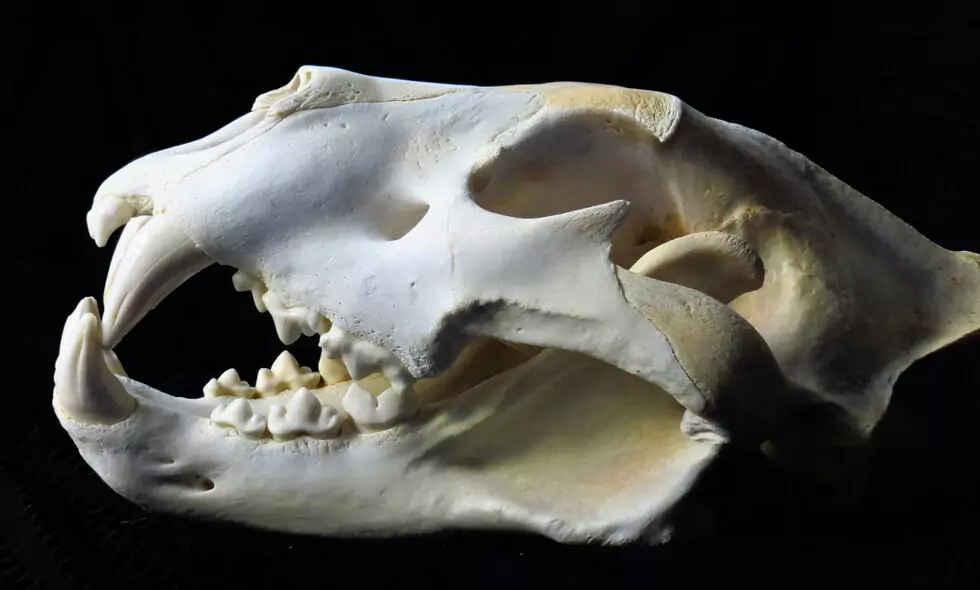
Carnivores and omnivores have large mouth openings compared to their heads. If you've ever seen a lion (on tv;)), you probably noticed that when they yawn or roar, they can open their mouths to incredible proportions (we don't call them jaws for nothing). This allows them to hunt and defeat their victims, and also to bite into them. But first, they’ll give them a hell of a scare. Ask any human who came across a lion or a bear in the wild and survived to tell the tale.
In omnivores and carnivores the main muscle that moves those scary jaws is the temporalis muscle (think of a forehead) that corresponds to most of the head circumference. Other facial muscles are weak because they are not necessary - carnivores don’t chew their food. Fascial muscles also help with facial expressions, and even though we know (thanks to science and personal experience) that animals feel a great deal, they can’t fully express it with their face, like we can. But can carnivores drink from a straw? Keep reading to find out.
The mouth of herbivores is small compared to the head and can’t be opened wide. Think of a horse, a cow, or us. Because of the small opening, herbivores are able to sip water, unlike carnivores who have to lap it with their tongue. This allows humans to drink through a straw, something that no carnivore or omnivore can do.
So, there it is, the straw test.
Herbivores have highly developed facial muscles, just like we do. There are more than 40 facial muscles on our face that are used for chewing and various facial expressions. Yes, we can express all our emotions very clearly, and even make funny and weird faces just for kicks.
Our lips are fleshy and serve to move food more easily into the mouth. This is not a characteristic of carnivores. Our tongue is strong, muscular, and fleshy, while its surface is smooth and soft, and it helps with chewing and speaking. These are all great and necessary adaptations for eating plant foods, as well as for kissing, something that's very specific and unique to humans.
The tongues of carnivores are very rough and scratchy. It's covered in hundreds of little spikes which makes it rougher than sandpaper. It serves for grooming and for removing fur, feathers and skin from their catch as well as flesh off of bones. If a lion would lick the back of your hand a few times, you would be left without a skin.
Another great indicator of who is who in the animal/human world is the jaw joint. Carnivores and omnivores have very strong and stable jaws. Their jaw joint is in line with their teeth. This allows them to grab the victim, wrestle him/her, and kill without the jaw breaking, because that would be the end of them (if you can't eat, you can't survive).
But there's a downside to it.Their jaws have a limited range of motion - it only goes up and down, and not left and right as it’s the case with us. Carnivores don’t chew their food, they tear it and swallow it, so they don't need these movements.
In herbivores, the jaw joint is located above the level of the teeth (near the ear), and the lower jaw is in the shape of the letter L. This enables much greater mobility of the jaw and movement left - right, up - down, and back and forth. It is characteristic for all species that eat plants because they have to chew them.
We have the same jaw. An interesting fact is that throughout our entire evolution, the human jaw never had a jaw joint in line with the teeth, like carnivores and omnivores have. This would suggest that we were never biologically meant to eat meat, and people did it when they had no choice or as part of a culture or a habit.
Our jaw is also very mobile, but unstable and would easily break under higher strains, like during hunting.
The saliva of carnivores is acidic and doesn’t contain digestive enzymes because the food they eat (animal flesh) is not digested in the mouth. They tear off large pieces of flesh and swallow it.
The saliva of herbivores and humans is alkaline, which helps digest plant food already in the mouth. It contains the enzyme amylase, which is responsible for breaking down carbohydrates.
We have probably heard so many times that human digestion begins in the mouth. This is why it’s recommended that we chew each bite of food for about 40 times before swallowing, until it almost turns into a liquid.
The esophagus of carnivores and omnivores is wide, short, and stretchy, which allows them to swallow large pieces of meat, bones, and the like without choking.
The herbivore's esophagus is narrow, long, and muscular. This is another reason why we have to chew our food before swallowing it. An interesting fact is that 90% of people who die from choking every year, choke by eating meat.
Carnivores, as you have probably seen, have huge canines that are at least 3 times longer than other teeth. Their premolars and molars are also blade-like.
The upper and lower teeth are arranged like scissors. The top and bottom do not match, but alternate. In this way, they can easily cut through the hardest tissues, such as skin, fur, tendons, muscles, and easily crush bones. Their teeth are separated so that pieces of meat don’t get stuck on them.
The bite force of carnivores is incredibly high, around 400-1000 psi. This makes sense when we know that during the hunt, they must be able to use it as a weapon without breaking their jaw or teeth.
Our maximum is around a modest 140 psi and we absolutely can not do the same.
What about omnivores? They also have huge, very sharp canines for killing and tearing food, and their molars are usually flatter for grinding plant material. Their teeth are also spaced out, like in carnivores.
In herbivores canines are extremely small, leveled with other teeth and not very sharp. The molars are wide and flat which is adapted for grinding food. Such teeth are not made for tearing flesh or crushing bones, breaking through tendons and muscles, fur and the like. The teeth of herbivores are also closely spaced, which makes it easier to grind plants. We have the same flat teeth as herbivores.
Some herbivores like male gorillas have bigger canines, but it’s not for killing animals or eating meat. Their diet includes coarse plant material like twigs, bark of trees, and bamboo shoots, and their canines help break that down. They also serve to intimidate their opponents, for defense, and for establishing social dominance. That said, their molars and premolars are still flat and wide, their teeth are closely spaced so they can grind and chew plants. Their upper teeth are above their lower teeth, and are not arranged like scissors, as it is with carnivores and omnivores. Their jaw joint is above the level of their teeth and their digestive tract shows they are herbivores.
The stomachs of herbivores and humans are very small. It takes up about 20-30% of the total gut capacity. It is the size of a fist. When we don't eat for just one day, it already shrinks.
When our stomach is full of food, stomach acid is still mild, around 4-5 pH. People can consume about 800 - 1270 calories in one meal, which is less than our daily requirement. This is why we have to eat several times a day. On average, people eat 3% of their weight daily.
In carnivores, most of the digestion takes place in the stomach. Their stomach acid is therefore extremely strong, around 1pH or less, so that it can dissolve everything, from flesh and tendons to bones. It facilitates the breakdown of proteins and destroys pathogenic organisms and parasites that are abundant in meat. They are even able to swallow and digest a whole animal if it’s smaller. Thanks to such strong stomach acid, they can also eat rotting carcasses they come across without getting sick.
Compared to herbivores and humans, the volume of the carnivore's stomach is huge. It makes up about 70% of the total gut capacity. They are able to eat 30% of their weight in just one meal. This means that a 300 pound lioness can eat an incredible 100 pounds of meat in one meal. A 100 pound wolf can eat up to 30 pounds of meat in one meal, which is an astounding 21,500 calories.
Imagine us trying to eat that much food at once. We would probably die of shock. And there is a good reason for such capacity.
The fact is, even the best hunters and nature’s killers like tigers and lions succeed in hunting only every 7 to 10 days because it’s not that easy, even for them. When they finally catch an animal, they need to replenish their energy for all the time they haven't eaten, regain their strength from the hunt and prepare for the period until the next catch.
Because of all this, they have no problem having an empty stomach for a long period of time, then overeating and starving again. Even animals like bears, that are typical omnivores, can hibernate during the winter, wake up, catch an animal or find a dead one and eat it whole without having any stomach problems.
It is completely different with us humans. When we skip a meal or don't eat for a day, the stomach shrinks so quickly that our next meal feels heavy. We also like our food as fresh as possible, and days old carcass from the side of the road is never on the
menu, or something anyone would crave for. If we eat a piece of meat that is a bit iffy, we get serious food poisoning.
There is also another big difference between carnivores and us. No animal in the wild eats meat every day, let alone multiple times. We could say that they also regularly fast, because they have no choice. Humans on the other hand eat according to their herbivorous nature, multiple times a day. With modern animal harming practices, it went so far that people often eat animals and animal based products multiple times a day, for breakfast, lunch, and dinner. It's no wonder so many people get sick from western modern diseases.
The small intestine of carnivores is very short, about 3-5x longer than their body length. It is smooth and has a tube shape so that the meat can move easily. It doesn’t have a pouch like structure. This is where food molecules are absorbed.
They have enzymes for digesting proteins and fats and can’t digest and absorb carbohydrates very well.
Omnivores like bears and pigs have a small intestine about 4-6x the length of their body, very similar to carnivores.
Herbivores and humans have a very long small intestine, 10-12x longer than their body length. It has a pouch-like structure with many pockets. This enables all the nutrients to be extracted from the fiber and plant material. Herbivores have an unlimited ability to digest carbohydrates.
They have a mix of enzymes for digesting fats, proteins and carbohydrates that can be adjusted according to their food.
Humans need fiber and macronutrients found only in plants to help move food through the long and narrow digestive tract with numerous circular folds. Fiber prevents the intestines from getting clogged with rotting food, while carnivores don't need that kind of help.
Humans and herbivores have an appendix, which is now known to be an important part of the immune system. Carnivores and omnivores don’t have one.
In carnivores and omnivores, the colon is very short, simple, straight, and smooth because its main function is absorption of water and salt, plus elimination. It doesn't
have a pouch like structure. The bacteria present there cause rotting. Animals want to remove the excrement from the body as soon as possible.
Herbivores have a much longer colon that has the structure of a series of pouches with many pockets. In humans, the colon has a typical structure of a herbivore.
Our colon is not only the organ of elimination, but the main organ of digestion and has several functions. Water and electrolytes are absorbed here. Bacteria further break down fibers, extract nutrients, and produce vitamins crucial for our health, such as vitamin K and B12. They also produce short-chain fatty acids, such as butyrate, which is crucial for the health of the brain and all the organs. Energy is being produced for our body and elimination occurs.
Food stays in the colon longer than in the stomach and small intestine combined, which shows how important it is for us.
When we look at biology and physiology, the shape of our body, teeth, jaws, and digestive tract, it is clear that we are natural born herbivores.
Many anthropologists and medical experts confirm the fact that humans are 100% herbivores. Dr. Milton Mills also wrote an indisputable essay on human physiology.
Dr. William Roberts, editor-in-chief of The American Journal of Cardiology and a professor at Baylor University, said: "Human beings are not natural carnivores. When we kill animals to eat them, they end up killing us, because their meat, which contains cholesterol and saturated fat - was never intended for human beings who are natural herbivores."